

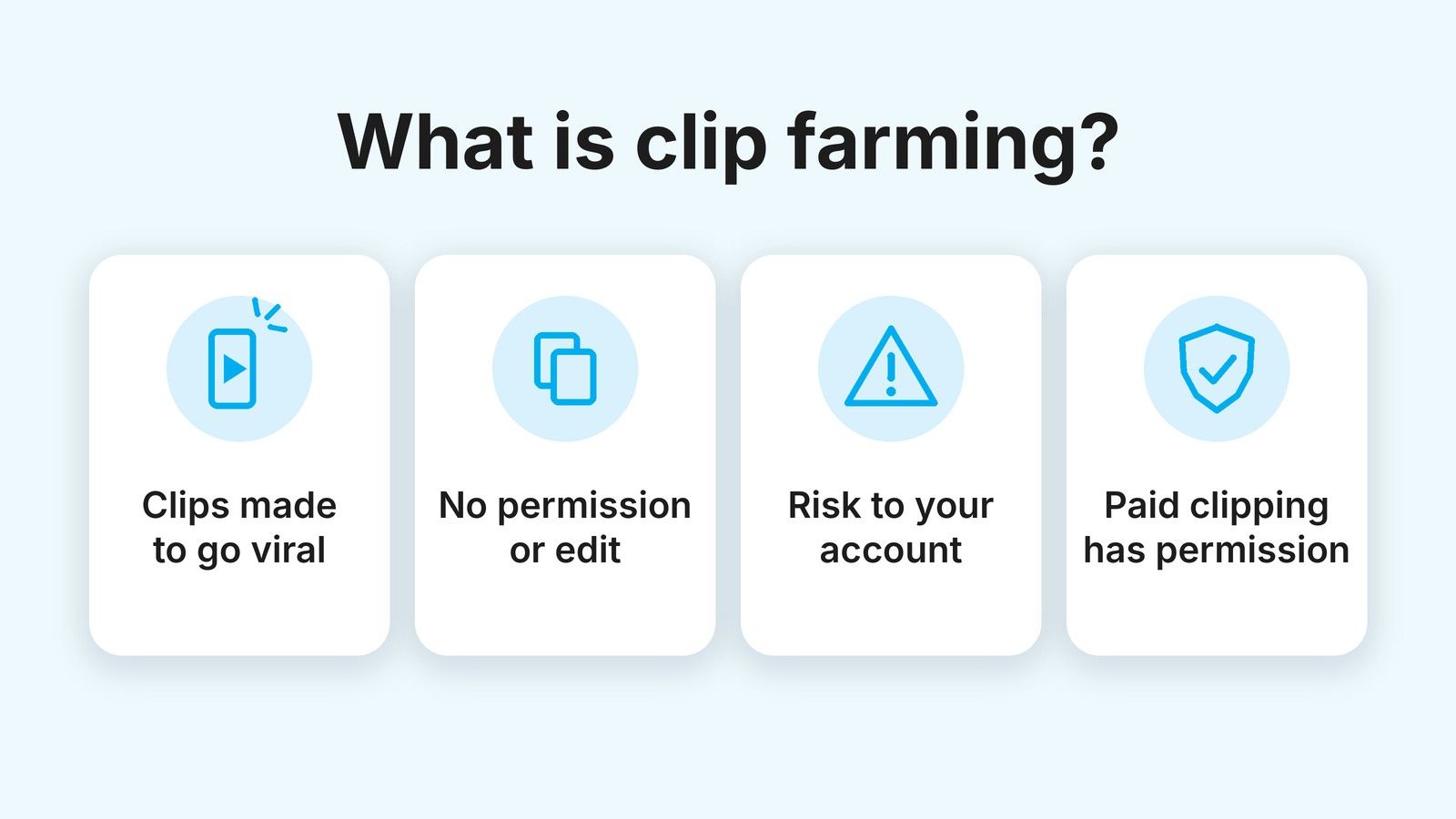
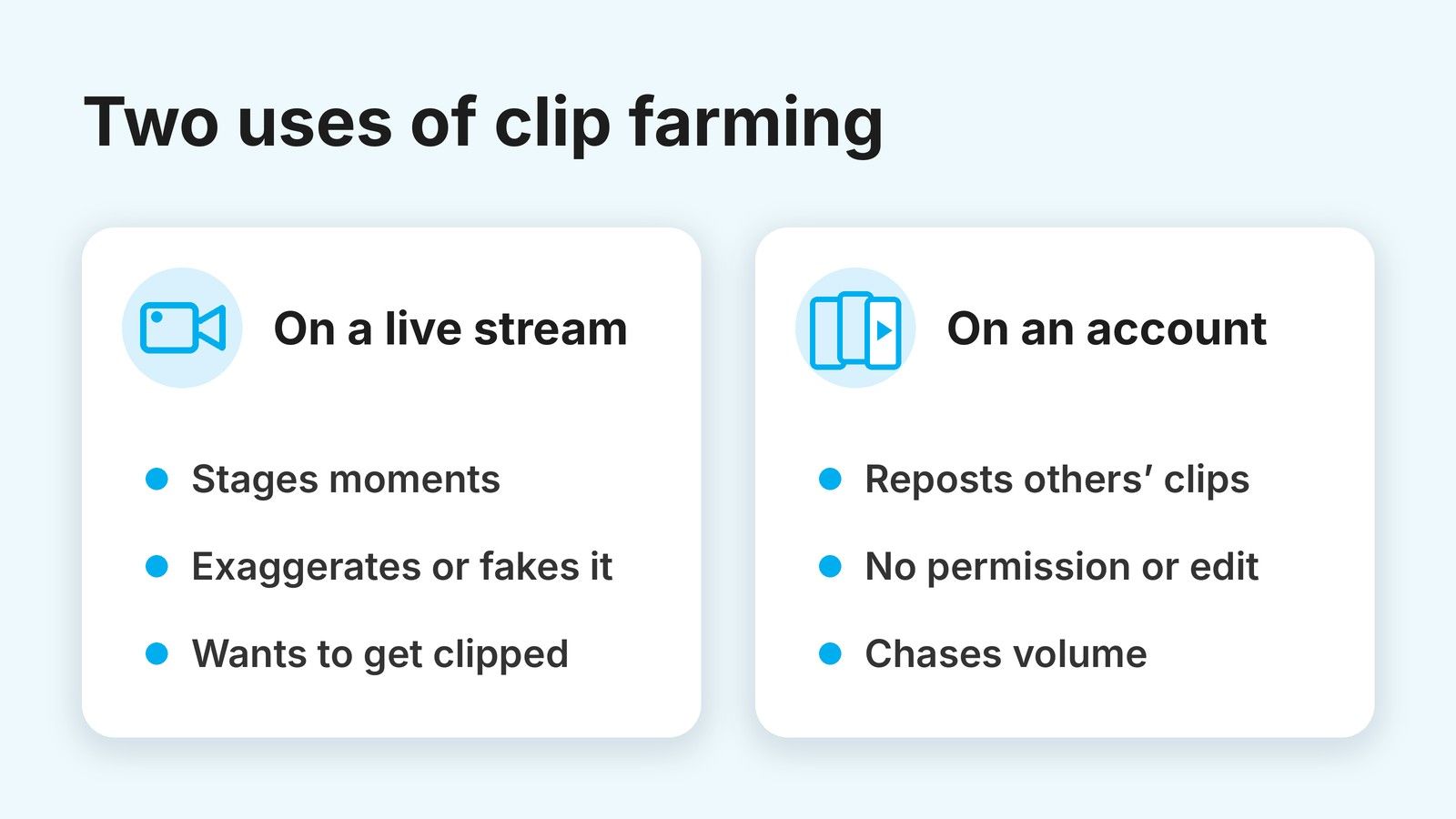
Clip farming is making or posting content mainly to get clips that spread. The term has two uses: a streamer who stages over-the-top moments so viewers clip them, and accounts that repost other people’s clips in bulk to rack up views.
From the outside, both look a lot like paid clipping, since you end up with short clips on TikTok, Reels or Shorts. Underneath, they have nothing in common. In a campaign, the creator supplies the footage, sets the terms and pays for the results that get validated. In a clip farm, nobody gave permission, nobody pays for the clips and, if something goes wrong, your account takes the hit.
Below you’ll find what the term means and where it comes from, how TikTok, Instagram and YouTube now treat accounts that live on other people’s clips, and how to post someone else’s clips without your account turning into a clip farm.
Quick summary
- It covers two things: staging viral moments on a stream and reposting other people’s clips in bulk to rack up views.
- It’s almost always a criticism: the moment is made for the clip, not for the people watching.
- Without permission, reposted clips lead to copyright claims. Without your own edit, platforms recommend them less.
- In paid clipping, the creator authorizes the footage and pays for valid results under each campaign’s terms.
What does clip farming mean?
It literally means farming clips: creating or posting content with the main goal of producing short moments that get shared. Cambridge Dictionary picked it up on its new words blog in February 2026, describing it as deliberately doing or saying something shocking or dramatic in a video so it spreads as clips.
The “farming” part comes from video games. There, farming means repeating the same action over and over to collect something, like gold, XP or points. Here, what you collect is views: you keep repeating whatever tends to go viral until a clip takes off.
It’s rarely a compliment. Saying a streamer is clip farming means accusing them of faking it: playing up their anger or staging a scene because they know that moment will end up on TikTok. Someone who does it is a clip farmer.
Two practices, one name
Both chase the same thing, clips that spread, but different people do them and the risks aren’t the same.
Clip farming on Twitch and Kick: staging moments
On Twitch and Kick, viewers can cut a moment from a live stream with a single button, and the best clips end up on TikTok, Reels and Shorts. Every clip that spreads is free advertising for the channel, so some streamers start causing those moments instead of waiting for them.
It usually looks like this:
- Rage that’s way out of proportion, with the scream landing right on cue.
- Jump scares, falls or “accidents” that were planned all along.
- Arguments with guests or chat that only exist to get a reaction.
- Stunts that keep getting riskier, because the audience gets used to the last one.
Audiences catch on. Whatever worked once has to be turned up the next time, and people who arrive through a fake clip rarely stay for the stream. And dangerous stunts run into every platform’s rules.
Clip farms: accounts that repost other people’s videos in bulk
The second use isn’t about the streamer but about whoever uploads their clips. A clip farm is an account, or a group of accounts, that keeps posting chunks of streams, podcasts, interviews or TV shows that aren’t theirs, usually without permission. The editing stops at the cut, auto captions and, at most, a mirrored video so it’s harder to recognize.
What they’re after is volume. Lots of accounts, lots of clips a day and the hope that one blows up. They then try to cash in on those followers, for example with promotions or links.
How is it different from paid clipping?
It comes down to permission, who pays and what gets paid. In paid clipping, a creator or an agency launches a campaign with authorized footage, sets the terms and pays the clipper for validated results, which are valid views or new subscribers depending on the campaign.
Side by side, the difference looks like this:
| What changes | Clip farm | Paid clipping |
|---|---|---|
| Footage | Other people’s streams, podcasts or shows, without permission | Whatever the creator or agency authorizes for the campaign |
| Who pays | Nobody pays for the clips | The campaign, under its terms |
| What gets paid | Nothing directly: platform payout programs leave out reused content | Valid views or new subscribers, with per-video caps |
| Editing | The cut as is, sometimes mirrored or sped up | A clip made for each platform, with something of your own |
| Ad disclosure | None | Labeled the way the campaign and the law require |
| Risk to the account | High: claims, lost reach and bans | Low, if you follow the platform’s and the campaign’s rules |
Both can post a clip that looks almost identical. What changes is everything behind it.
The two worlds overlap more than you’d think. Some streamers pay clippers to post their clips and, at the same time, stage moments to feed them, so some people call any clipping campaign clip farming. Whatever you call it, the difference lies in permission, in what each clip adds and in whether the ads are disclosed.
You can follow the whole process, from picking a campaign to getting a clip validated, in our explanation of how a paid clipping campaign works.
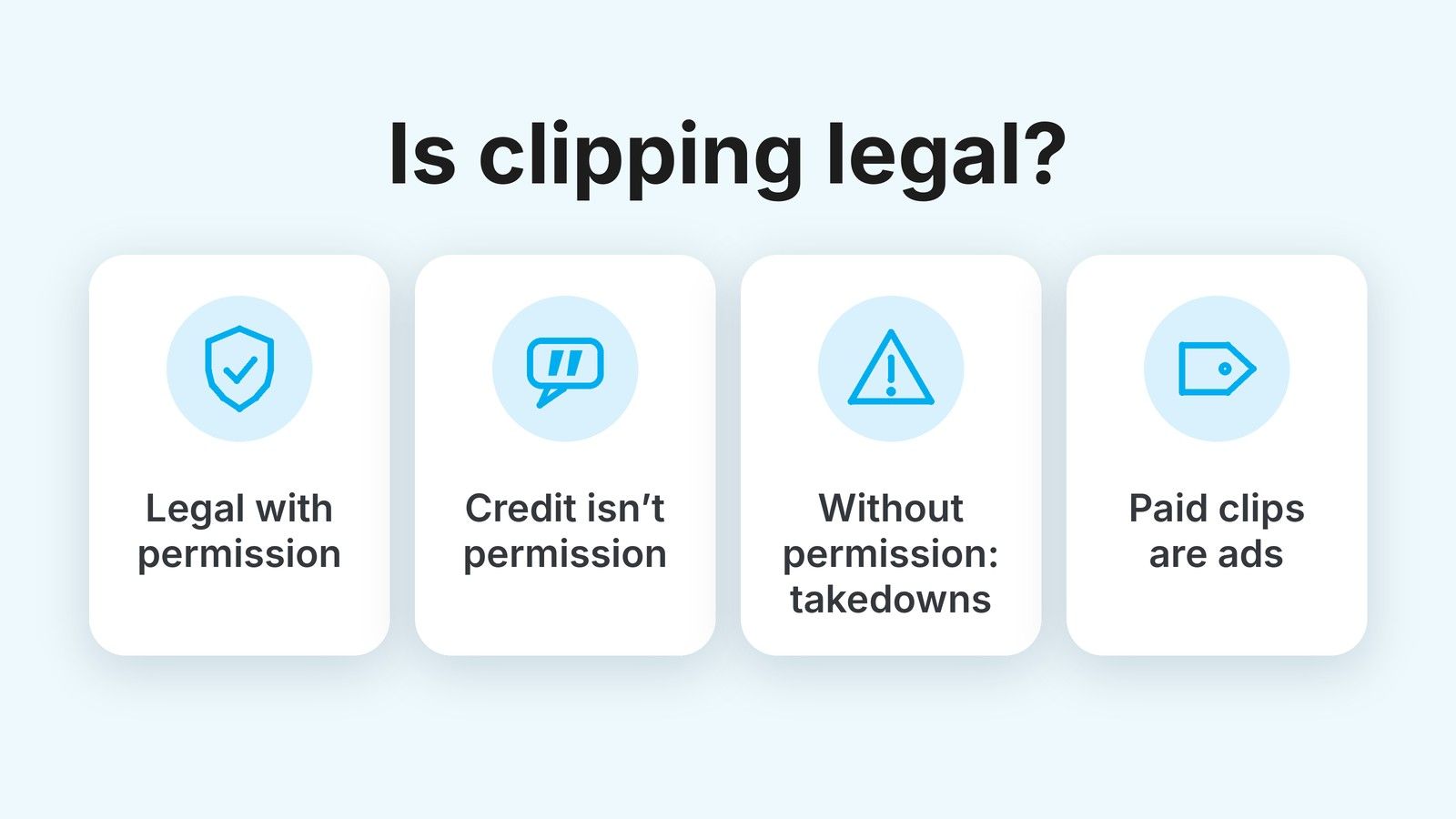
Crediting the streamer isn’t permission
Putting their name in the caption or tagging them is good manners, but it doesn’t give you the right to post their content. Fair use in the US and fair dealing in the UK are narrow defenses judged case by case, not a license to repost someone’s stream. Permission comes from whoever owns the rights, and in a campaign it comes with terms: which footage you can use, on which platforms and how to label your account.
Why clip farming puts your account at risk
Because it combines two problems that platforms handle separately: posting content without permission and posting it without adding anything. The first is about copyright; the second, about what each platform chooses to recommend. A clip farm usually has both.
Without permission, whoever owns a stream or a podcast can have your clip taken down, which in the US usually means a DMCA takedown notice. On YouTube, each video removed over a copyright takedown request adds a strike, and a channel with three strikes in 90 days is subject to termination; if a channel linked to yours gets there, yours can go too. TikTok and Instagram take down reported content and can suspend accounts that keep infringing.
Without your own edit, the problem is a different one. Even if nobody files a claim, the platforms no longer hand out reach to accounts that live on unedited reposts:
- TikTok keeps unoriginal content out of the For You feed: videos posted as is, without creative edits or with another account’s watermark.
- Instagram, since April 30, 2026, stops recommending accounts that mostly post unoriginal content to people who don’t follow them, whether that’s reels, photos or carousels.
- YouTube bans scraped content in its spam policy, with the example of “a channel that takes popular clips and re-uploads them in their entirety without any transformative editing.” And on October 1, 2026, it announced that channels that mainly re-upload other creators’ videos without significant changes will likely get less distribution in the Shorts feed.
Spreading the clips across more accounts doesn’t spread the risk. TikTok lets you run several, but not to deceive people or get around its rules, and what you do on one can come back on the others.
How to post someone else’s clips without becoming a clip farm
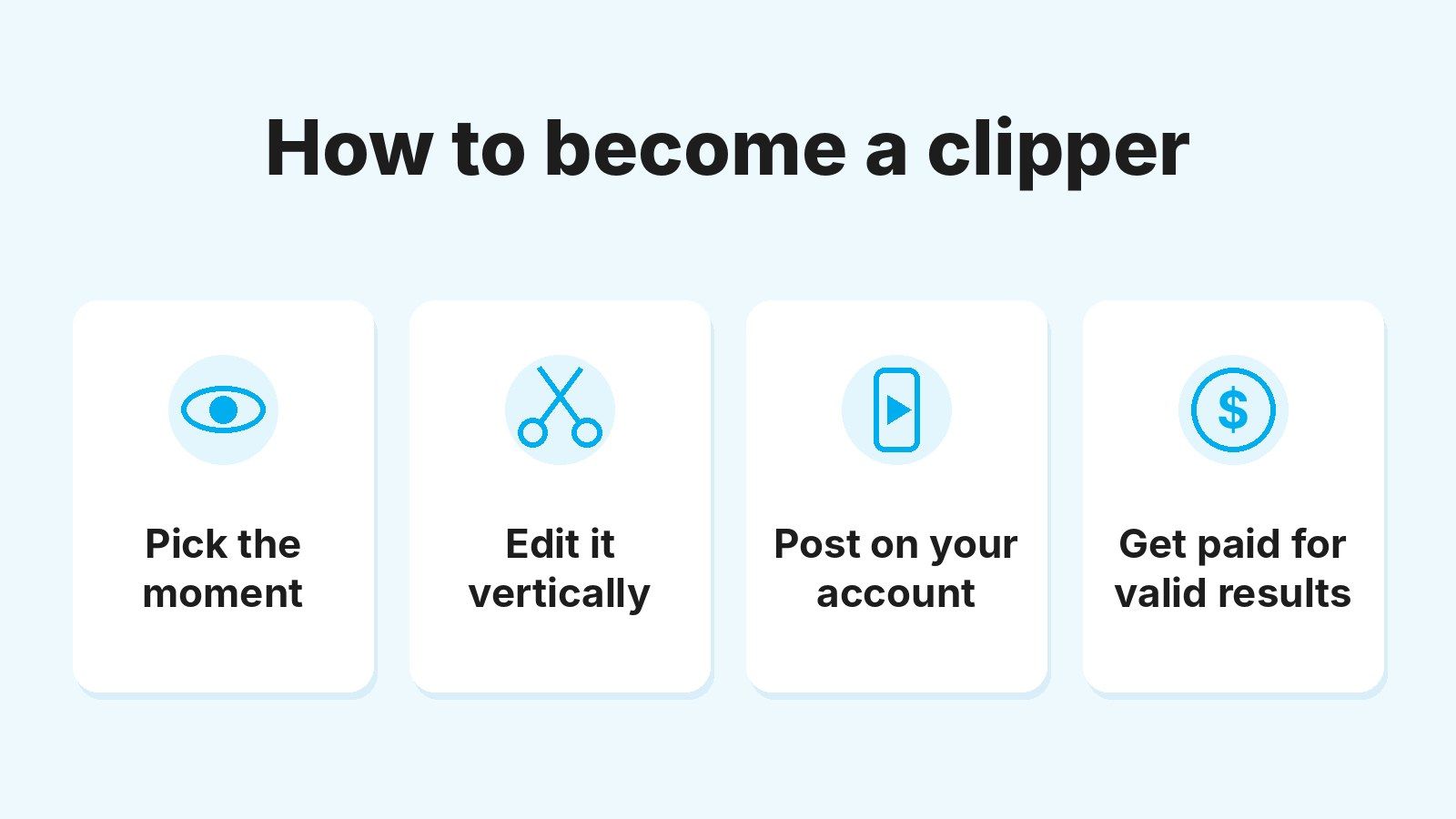
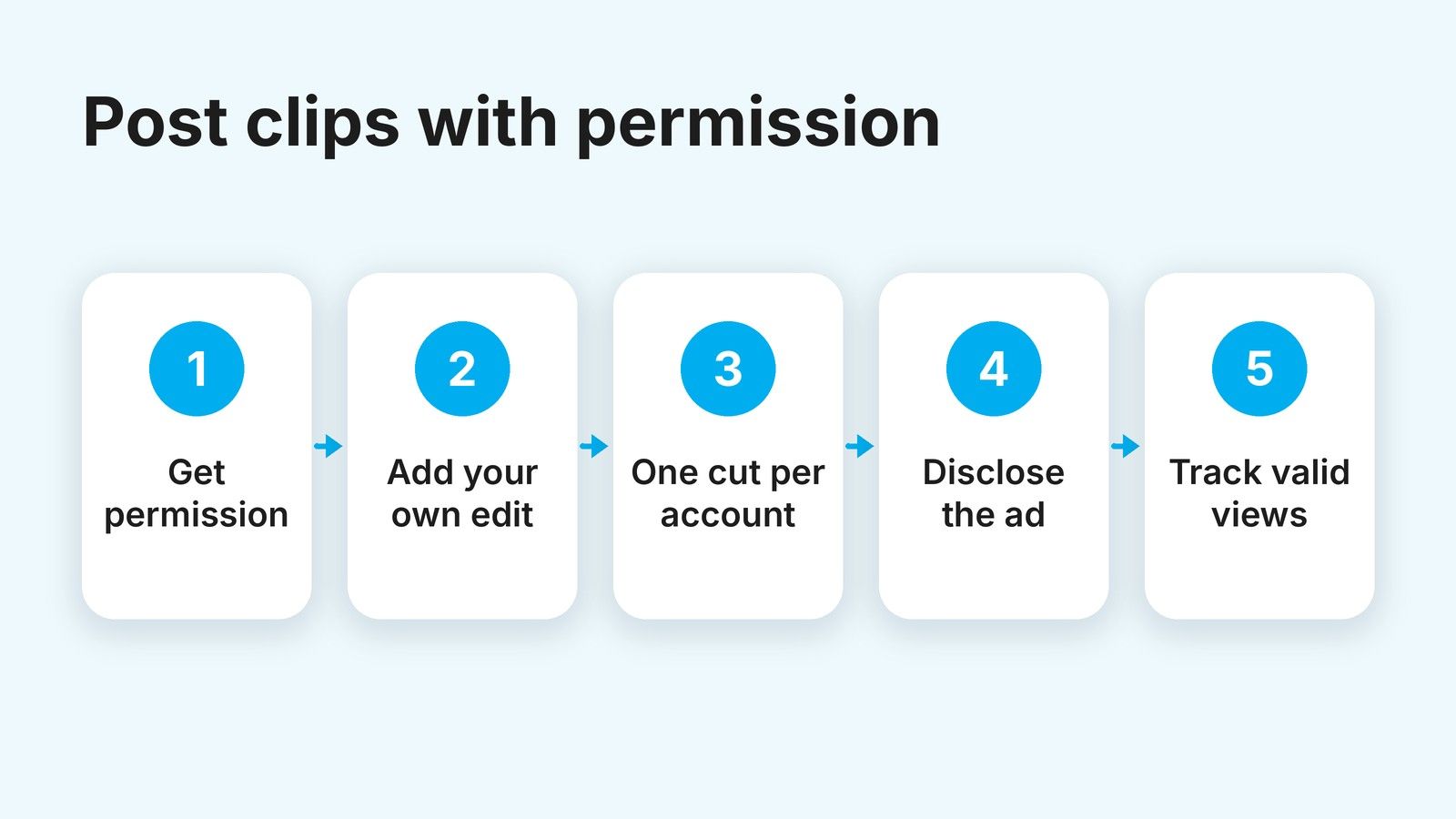
If you love finding the best moment in a stream or a podcast, you don’t have to stop. You just have to do it with permission and with some craft, in this order:
- Get permission before you post. In writing from the creator or through a campaign, where the footage comes authorized and with its terms.
- Add something people can see. Your own hook, on-screen context, a voiceover that explains or an edit that tells a story. Auto captions, mirroring or speeding up the video don’t count, and YouTube’s reused content policy applies even if you have permission.
- Make a different cut for each account. When two videos are identical, platforms usually recommend only one and the other gets no reach.
- Disclose the ad. If you’re paid to post, the clip is advertising. In the US the FTC expects a clear disclosure, and in the UK the ASA asks for a label such as #ad. Follow the campaign’s instructions as well.
- Track what gets validated, not the view counter. In a campaign you’re paid for valid views, up to each video’s cap. Buying or inflating views doesn’t get paid and puts the account at risk.
How long each clip takes when you work this way, and how a day breaks down, is in our article on what a clipper’s day actually looks like.
Want to get paid for clips? Start with permission
Farming clips can bring quick views, but it doesn’t pay for the clips and it doesn’t leave you with an account that lasts. If what you enjoy is spotting the moment and editing it, the path that pays is working with authorized footage and clear terms from your very first clip.
On Tikful, you can browse open campaigns and their terms before you post anything. Sign-up is free and only for people 18 and over.