

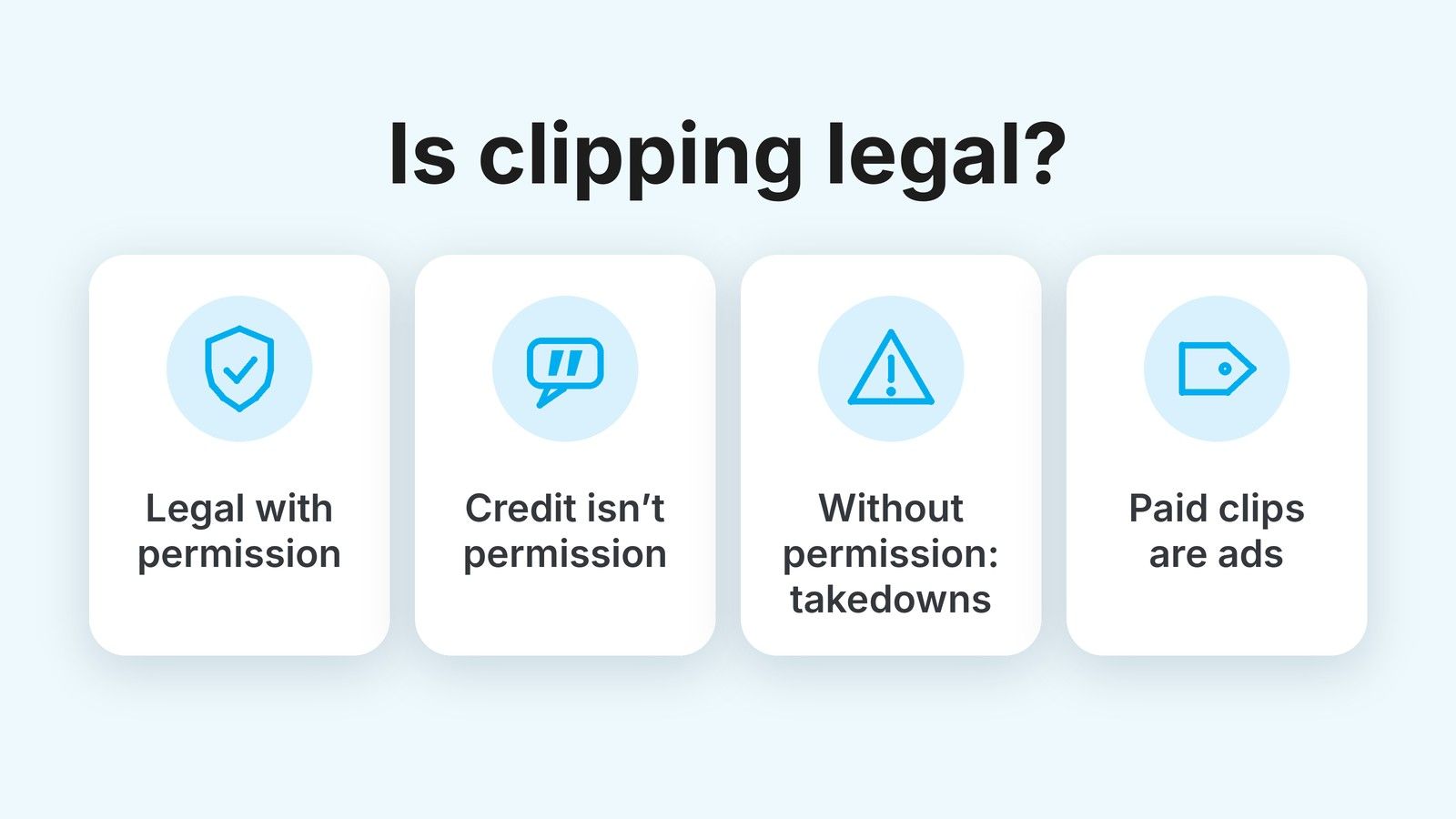
Yes, clipping is legal when the video you cut is yours or you have permission from whoever owns the rights, you follow each platform’s rules and, if you’re paid to post it, you disclose it as an ad. Without that permission, clipping other people’s videos infringes their copyright, even if you credit them. The exceptions are few and narrow.
In paid clipping, permission comes with the campaign. The creator uploads the footage they authorize to the campaign vault and decides which platforms it can go on and under what rules. As long as you work with that footage and within those rules, the permission covers you. Step outside them, say with another platform or a song the creator doesn’t own, and you’re not.
What follows is general information for the US and the UK, not legal advice. If you’re dealing with a specific situation, like a claim on your channel or an account you want to build on other people’s videos, talk to a lawyer.
Quick summary
- Clipping is legal with permission from whoever owns the video’s rights. In a campaign, that permission covers its footage, its platforms and its rules.
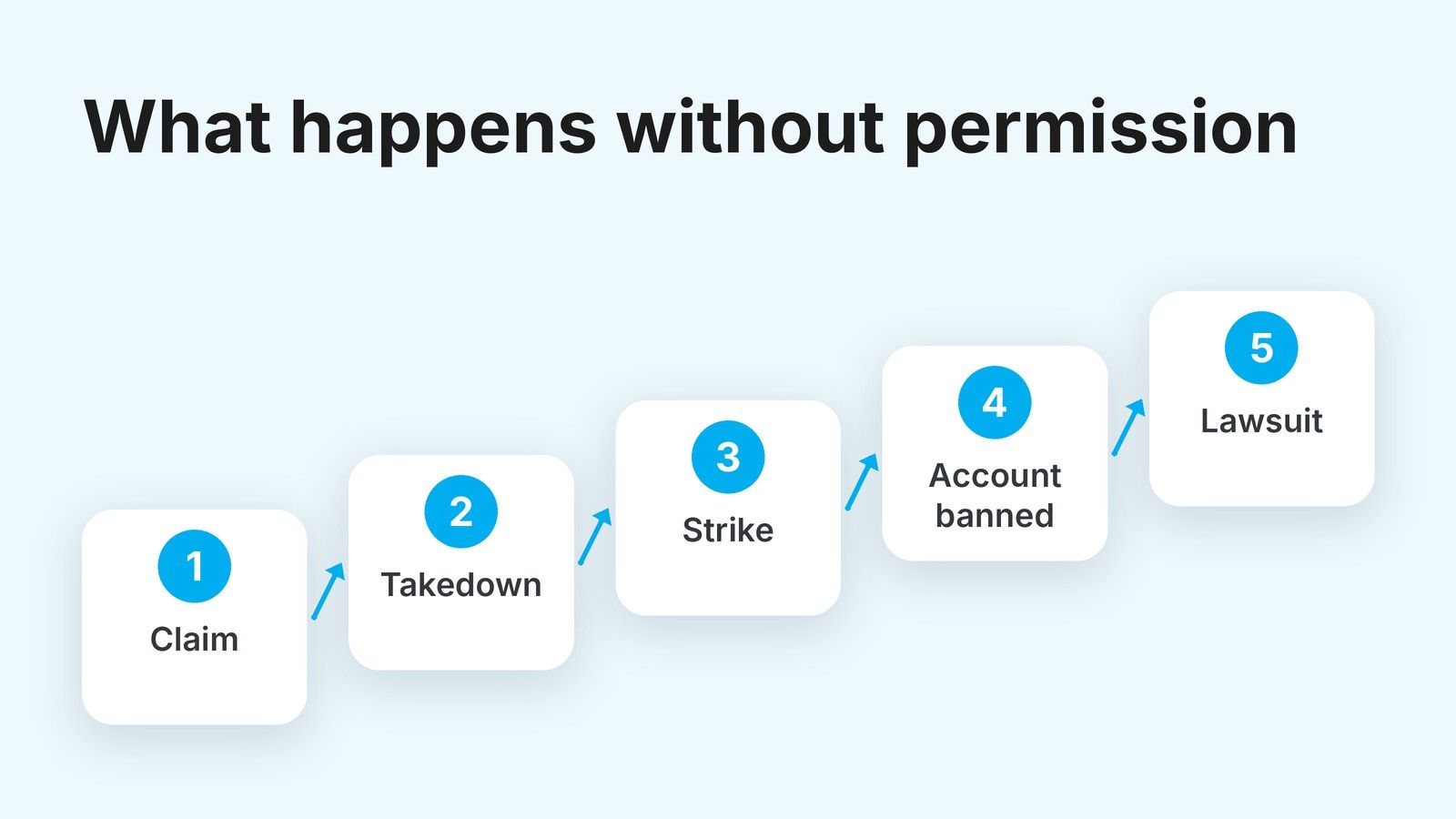
- Without permission come claims, takedowns, strikes and banned accounts. And the rights holder can sue.
- Giving credit, using a few seconds or not monetizing the clip doesn’t replace permission.
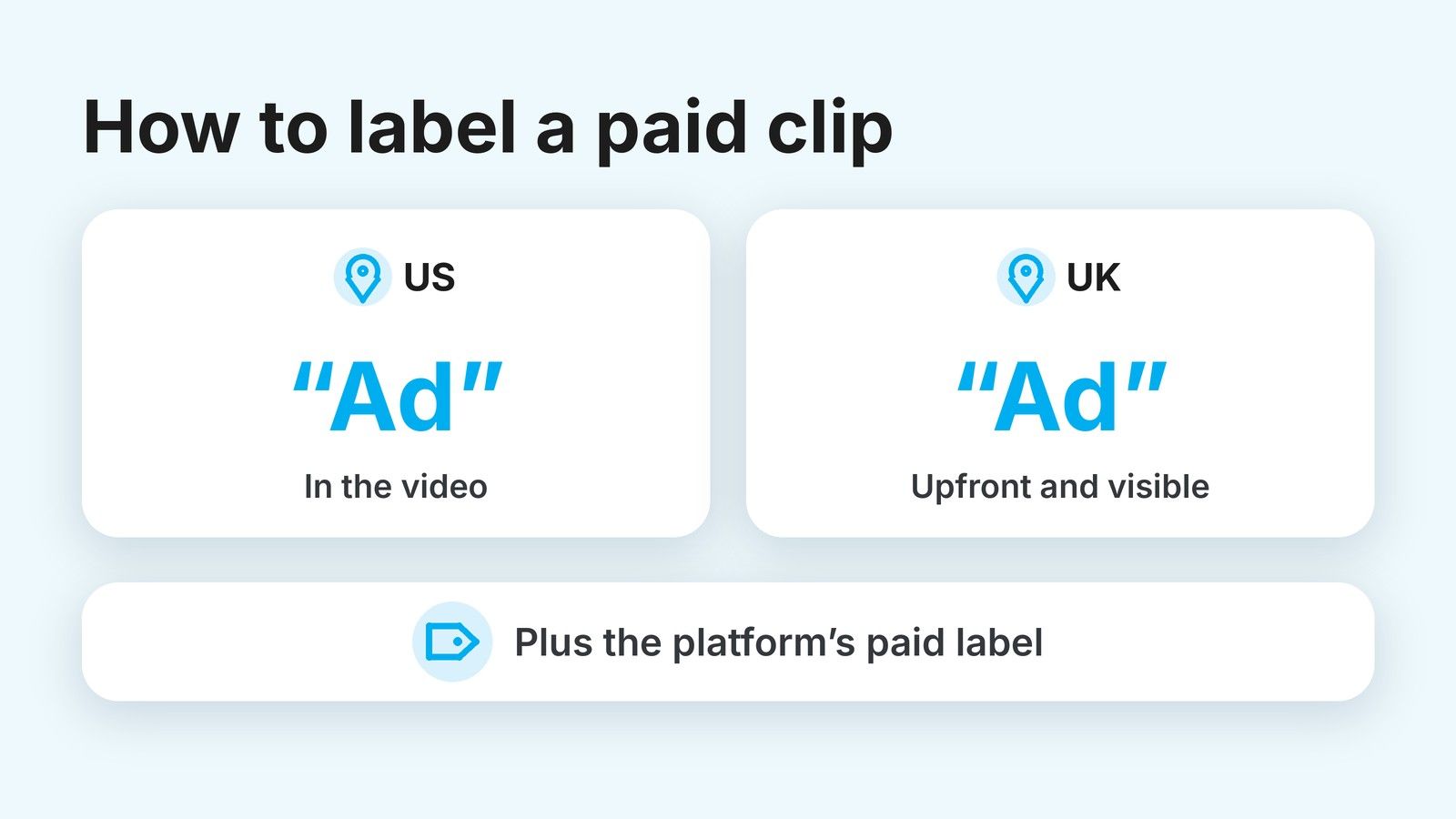
- If you get paid, the clip is an ad: turn on the platform’s label and put “Ad” in the video itself.
When is clipping legal, and when isn’t it?
It’s legal when whoever owns the video lets you use it for what you’re doing with it, whether that’s a cut for TikTok, a series of Shorts or an edit that strings several moments together. The clip’s length, your edit and your credits don’t change the answer. Where the footage comes from does:
| Situation | Legal? | What you can run into |
|---|---|---|
| You clip your own videos | Yes | Only each platform’s rules |
| You post a campaign’s footage by its rules | Yes, within its terms | Outside its platforms or deadlines, you’re neither covered nor paid |
| A creator gives you written permission | Yes, within what you agreed | Step outside it and you’re no longer covered |
| You post streams, podcasts or TV shows without permission | No | Takedowns, strikes or a banned account |
| Same thing, but with credit or a tag | No | Same result: credit isn’t permission |
| You use short excerpts to comment, criticize or parody | It depends | Fair use or fair dealing, decided case by case, often after a claim |
The first three rows have one thing in common: someone with rights to the video said yes. In the other three, nobody did. And only the last one sometimes holds up, in specific cases that a platform or a court ends up deciding.
What counts as permission to post a clip
Permission means the rights holder authorizes you to copy their video, edit it and post it on your accounts. Those are separate rights, and in both the US and the UK they belong to the copyright owner: copying a work, adapting it and showing it to the public all need their OK unless an exception applies. A clip does all three at once.
Permission comes from whoever owns the rights, which isn’t always the person on screen. For a podcast, it’s usually the show or its producer; for a TV series, the studio or network; for footage in a Tikful campaign, the creator who uploads it to the vault.
And it has limits. A license covers what was agreed: which footage, which platforms, for how long. In a campaign, that means its footage, its platforms, its deadlines and its posting rules.
Anything you add sits outside it. A creator can authorize their video, but not the song you lay over it or a snippet from another creator you cut in. That’s why any music you use should come from each platform’s library. Our guide to clipping goes over the most common mistakes with authorized content, from copying footage beyond what’s allowed to inflating results.
What happens if you post clips without permission
It almost always starts on the platform: the rights holder files a claim, the clip comes down and your account takes a hit. What comes next depends on how often it happens.
On YouTube there are two levels. A Content ID claim, from the system that automatically spots copyrighted material, can block your Short or send its ad revenue to the rights holder, but it usually doesn’t penalize your channel.
A copyright takedown request, which in the US usually means a DMCA notice, removes the video and adds a strike, and a channel with three strikes in 90 days can be terminated. Each strike expires after 90 days if you complete Copyright School and haven’t reached three.
TikTok removes content that infringes copyright and can suspend or ban accounts with repeated violations. Instagram has a repeat infringer policy that can end with your account disabled.
Then there’s the cost you don’t see. A clip without permission isn’t part of any campaign, so nobody pays for it, and accounts that live on other people’s videos lose reach on TikTok, Instagram and YouTube. It’s what happens to accounts that farm other people’s clips.
Outside the platforms, the rights holder can take you to court to make you stop and to claim damages. It’s the least common outcome, and the most expensive.
Why giving credit isn’t permission
Because credit says whose video it is, not that its owner lets you use it. It’s the most common misunderstanding on clip accounts, and none of these fixes it:
- Crediting or tagging the creator. It’s good practice, and many campaigns ask for it, but it isn’t a license.
- Writing “no copyright intended” or “all rights go to the owner.” It only puts in writing that you know the video isn’t yours.
- Using just a few seconds. There’s no length that’s safe without permission.
- The video is public or went viral. Anyone being able to watch it doesn’t mean anyone can repost it.
- You don’t make money from the clip. An unauthorized copy is still one even if it isn’t monetized.
- Editing, speeding up or mirroring it. It changes what people see, not who owns the footage.
What the law does have are narrow exceptions. In the US, fair use can cover commentary, criticism or parody, but courts weigh four factors case by case, including how much you took and whether your clip could stand in for the original, and the US Copyright Office says there’s no formula for a safe amount you can use without permission.
In the UK, fair dealing covers set purposes like criticism, review, quotation and parody, and the government’s guidance asks how a fair-minded and honest person would have dealt with the work.
A clip that reposts the best moment of a stream doesn’t comment on anything. It just reuses it. And it competes with the original for the same views. If you want to build a reaction or commentary account on other people’s videos, talk to a lawyer before you start.
How to disclose paid clips as ads
If you get paid to post a clip, that clip is an ad and has to be recognizable as one from the first second. It doesn’t matter whether the campaign pays per view or per subscriber: you’re promoting the creator in exchange for money.
In the US, the FTC’s disclosure guidance for influencers says you have to disclose any financial relationship with a brand where people will notice it, and in a video, the disclosure belongs in the video itself, not just in the caption. Terms like “ad,” “advertisement” and “sponsored” work; vague ones like “sp,” “spon” or “collab” don’t.
US law applies even if you post from abroad, as long as it’s reasonably foreseeable that the post will affect US consumers.
In the UK, the CAP Code that the ASA enforces says ads must be obviously identifiable, and the ASA expects a prominent “Ad” label upfront. It advises against “sponsored,” which people read in different ways, and against labels like “gifted” or “in association with.” Consumer protection law, which the CMA enforces, points the same way.
Here’s what that means for each clip:
| Where your audience is | Who enforces it | What to put on the clip |
|---|---|---|
| US | The FTC | “Ad” or “Advertisement” in the video, not just the caption |
| UK | The ASA and the CMA | “Ad” upfront and easy to see |
| Any platform | TikTok, Instagram and YouTube | Their paid content label, on top of the above |
Turn on each platform’s label every time: the commercial content disclosure setting on TikTok, the paid partnership label on Instagram and the paid promotion checkbox on YouTube. On TikTok, a commercial video without it can also be kept out of the For You feed.
But neither the FTC nor the ASA promises the label alone is enough, so add “Ad” in the video and follow the campaign’s instructions.
How to check your clip is legal before you post
Five questions before you hit post head off nearly every problem in this guide. If any answer is “I don’t know,” wait:
- Where does the footage come from? The campaign vault or written permission. If you can’t say who let you use it, don’t post it.
- Are you posting where the permission reaches? On the campaign’s platforms, within its deadlines, from an assigned account. Outside that, you’re not covered and the clip ends up among the clips that don’t get validated.
- What have you added? Music from the platform’s library and no snippets from other videos. The creator’s permission covers what’s theirs, not what you bring.
- Is it clear whose account this is? If it’s dedicated to a creator, say it’s a fan account in the name or bio. Impersonating someone breaks TikTok’s and Instagram’s rules.
- Is the ad disclosed? Platform label on and “Ad” in the video from the start.
Keep proof of permission
Screenshot the campaign’s terms or save the message where the creator gives you permission. If a claim hits an authorized clip, that’s what lets you dispute it on YouTube or appeal on TikTok and Instagram. Only dispute when you have that permission: YouTube can penalize disputes without a valid reason, and the rights holder can respond with a takedown request, which brings a strike.
Start with permission, then edit
Before you think about the hook or the format, answer one question: who let you use this video? If the answer is a campaign with its footage and rules in writing, you can spend your time on making good clips. That’s the hard part anyway.
On Tikful, creators set out their authorized footage and the rules for each campaign before you post anything, and sign-up is free for anyone 18 or older. If you want to work this way from your first clip, start with authorized footage.